Background
IECED believes that all Pakistani children deserve the best possible growth and well-being, which can only be realized by combining efforts from home, school, and community. All children aged 0 to 8 must have access to holistic Early Childhood Care and Education (ECCE). Pakistan was a signatory at the Dakar Conference on the Millennium Development Goals (MGDs). Universal education was one of the most important goals agreed to in the Conference. However, we failed to set up the required institutions for training quality teachers which were a prerequisite for meeting this goal.
Meanwhile the demand for teachers for staffing the mushroom growth of nursery, kindergarten and preprimary schools continued to grow. In the absence of trained qualified teachers the quality of these schools and the quality of basic Early Childhood Care and Education (ECCE) continued to suffer. In the total absence of acquiring modern advancements that were being made in ECCE in other countries we failed to break the old shackles of an outdated frame of mind that was hampering our education system from the bottom up.
The rest of the world has moved on to Sustainable Development Goals (SDGs) in the Paris Conference to which Pakistan is also a signatory. Goal 4 of the SDGs highlights the importance of ECCE and aims to make it sustainable.
Our unrelenting efforts in promoting ECCE, spanning over the last 10 years have greatly influenced private school owners as well as policymakers who now not only realize the basic importance of ECCE but are taking practical steps and making policies at provincial and federal government levels to train qualified ECCE teachers. The broad gap between the demand and supply of trained teachers however persists.
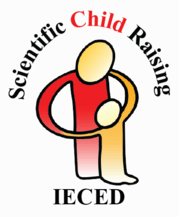
Our Logo
IECED’s logo expresses, that when a children grow up in a responsive care giving environment, they receive a message that they are worthwhile, that their needs will be met, and that their unique temperament and talents will be respected. When a caregiver (parent/guardian and/or teacher/provider) is sensitive to them and reacts consistently, children feel safe and supported. It allows children to learn and develop in the presence of a responsible adult. By embracing the most current scientific and research-based information on holistic and optimal child development, we must safeguard and nurture the “natural” child.

Our Vision
All young children deserve optimal development & wellbeing. Which is only possible through a comprehensive approach and by engaging home, school, and community.
Our Mission
Our Mission is to create a high standard institution that will contribute significantly to improve the quality of ECCE by producing outstanding ECCE teachers, conscious parents, educational leaders, teacher educators, and researchers who are inquisitive and reflective, who value excellence, and who are dedicated to improving the ECCE system in Pakistan and beyond. This will be accomplished through providing programs that are influenced by evidence-based teaching and learning research, that establish a close link between theory and practice, and that utilize modern technology effectively.
Parents and communities have to be constructively engaged so that they understand their important roles in child development. IECED is charged with acting as a catalyst in the field of Early Childhood Care and Education by teaching and mobilizing communities and parents, reforming parenthood, developing curriculums, influencing curricular framework, policies, and practices, and modelling Early Childhood Education reforms

Core Values
IECED encourages its faculty and staff to live by, to ensure these values that underpin its programmatic offering and to teach students the core values of the Institute. The core values are given below:
Integrity
Respect for all
Self - discipline
Excellence
Fairness and Justice
Diversity
Accountability
Rights – based Service
Our Core Expertise
Training
Making a start in developing human resources to take on the responsibility of scientific development of children had been long overdue. The task at hand was to provide high-quality ECCE instruction at a reasonable cost. There was a crying need for professional development of ECCE teachers. Training had to be inclusive which focused both on academic knowledge as well as vocational training. Modern Information Technology was making great advances and posing new challenges on how to integrate Information Technology in Training and how to reach teachers located in far flung and marginalized areas.
Institute of Early Childhood Education and Development (IECED) was founded with this goal and has been operating successfully ever since its founding. Its foundation has prompted numerous other organizations to build similar Institutes for teacher training in this critical sector. However, there is still a significant disparity between the need for certified ECCE teachers and the number of people getting this training. IECED is looking forward to multiplying its efforts to close the gap. Parents and community stakeholder’s role in child optimal development cannot be denied. Therefore IECED is also providing training sessions, guidelines and support for effective parenting and connected community support through different modes.
Publications
Thousands of teachers are currently working in both public and private Kindergarten, Montessori and Preprimary schools around Pakistan. These teachers, despite having earned graduate degrees in their respective fields, are oblivious of the fundamental demands and concepts of Early Childhood Care and Education (ECCE). There is an urgent need to provide some basic ECCE knowledge to teachers who are already working in this essential field. Therefore, IECED is intending to publish manuals and handbooks in national and regional languages to provide such teachers, parents, and caregivers with a basic understanding of ECCE theories and practices. We believe that these publications, followed by higher-level publications in subsequent phases, will help to improve the effectiveness and benefits of Early Childhood Care and Education in Pakistan. Needless to point out that the publications would also benefit parents and non-teachers in widening their awareness of children’s developmental needs.
In order to make these manuals more effective and purpose oriented we shall also benefit from the research work being conducted by our students as part of their training programs. This research is being supervised and evaluated by our highly qualified faculty members who are trained in most modern disciplines.
Consultancy
In response to the rising need of a society in rapid transition, Early Childhood Care & Education-ECCE institutions have come up in large numbers. The dearth of knowledge and trained professionals in the ECCE field has resulted in a haphazard growth of institutions without due consideration to their initial and subsequent requirements, the mode of working or the importance and methodology of promoting interaction with parents and the community. So much of effort and initiative has gone waste because of lack of proper guidance. Gradually the consciousness that mere setting up of a school is not enough is rising. Entrepreneur in the Private sector as well as the Government are realizing that effort and investment should be channelized in a scientific manner. IECED offers consultancy services to disseminate its own expertise and experience and help existing institutions enhance their quality and standards. It also provides guidance to new entrepreneurs and government agencies working in this field on the fundamentals, structures, and demands of Early Childhood Institutions, as well as how the resources at their disposal might be used in a scientific manner to obtain the best possible results.
Affiliations, Accreditation & Alignments

Sindh Board of Technical Education (SBTE).

Benazir Bhutto Shaheed University Lyari (BBSUL), Karachi.
Sindh Teachers Education Development Authority (STEDA).
World Education Services (WES)
Partners